
Pest Control in the UAE: Tenant vs Landlord Responsibility
- Pest_Control
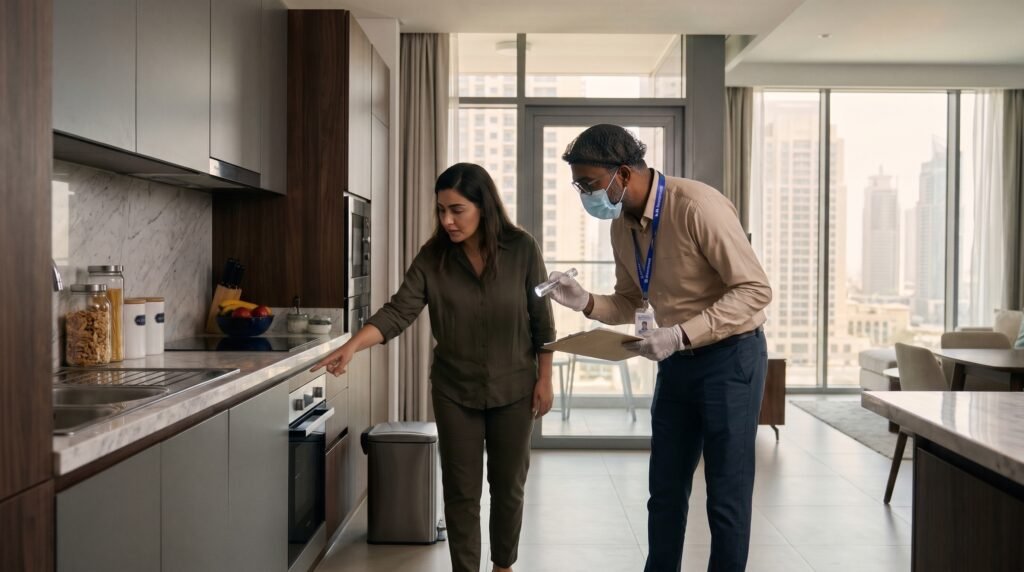
Table of Contents
Who Pays for Pest Control in the UAE, Tenant or Landlord?
You move into a rental apartment, and within a few weeks cockroaches are appearing in the kitchen. Or you’re a landlord whose tenant reports mice, and you wonder whether this is your bill or theirs. Or you’re moving out and the agency’s inspection report lists “pest control treatment” as a deduction from your deposit.
Pest control in the UAE sits in a grey area between the landlord’s duty to keep a property fit to live in and the tenant’s duty to look after it day to day. The right answer depends on what caused the problem, what the tenancy contract says and which emirate you’re in. This guide explains how responsibility is usually divided, the scenarios that decide it, the contract clauses to check, how to handle move-out charges and how to resolve a disagreement without it turning into a dispute.
The Short Answer
- Landlords are generally responsible for maintenance and repairs: that affect the tenant’s intended use of the property, unless the contract says otherwise.
- Tenants are generally responsible for day-to-day upkeep: and for problems caused by their own habits, such as poor food storage or waste handling.
- Pest control is commonly divided by cause: an infestation that existed before the tenancy, or that comes from the building’s structure or shared areas, usually falls to the landlord, while an infestation caused by the tenant’s hygiene or behavior usually falls to the tenant.
- The tenancy contract matters: because it can allocate pest control and set cost thresholds for minor maintenance.
The Legal Starting Point in Dubai
In Dubai, landlord-tenant relationships are governed by Law No. 26 of 2007, as amended by Law No. 33 of 2008. On maintenance, the law places responsibility on the landlord for maintenance and repairs affecting the tenant’s intended use of the property, unless the parties have agreed differently. Where the contract does address who maintains what, the contract terms prevail. And where it is silent, the law generally defaults to the landlord’s responsibility.
In practice, the dividing line is often described this way: major repairs and essential building systems fall on the landlord, while minor, day-to-day maintenance is generally the tenant’s responsibility.
What That Means for Pests
Commonly cited guidance treats pest control as depending on cause: the landlord pays where an infestation existed before the tenancy or is structural, and the tenant pays where it is caused by the tenant’s hygiene or habits. Tenancy law doesn’t spell out every pest scenario, so the cause, the evidence and the contract usually decide the outcome.
Contract Thresholds
Many Dubai tenancy addendums include a “minor maintenance” clause. For example, a contract may say the tenant pays for repairs under a set amount, such as Dh500, while the landlord covers anything above it. If your contract has such a clause, check whether a pest control visit would fall under or over the threshold, and whether pest control is mentioned separately.
Management Companies
Landlords often use property managers or facilities companies. Appointing a contractor doesn’t necessarily transfer the landlord’s legal responsibility to the tenant.
Other Emirates
Abu Dhabi, Sharjah, Ajman and the other emirates have their own tenancy rules, and the details differ. The same practical principles apply: the contract matters, the landlord is generally responsible for keeping the property fit for use and the tenant is responsible for damage and problems caused by their own use. Check the law and the registered contract that apply to your property, and confirm the position for your emirate.
Who Pays? Common Scenarios
| Scenario | Usually Points To | Why |
|---|---|---|
| Pests present when you moved in: (visible on the move-in inspection or within the first days) | Landlord | The problem pre-dates the tenancy and the property wasn’t fit for use |
| Building-wide or shared-area infestation: (risers, waste rooms, communal drains, neighbouring units) | Landlord or building management | The source is outside the tenant’s control |
| Structural causes: (gaps in walls and pipes, damaged seals, drainage defects, damp) | Landlord | These are repair and maintenance matters |
| Termites or timber pests | Usually landlord | Typically structural and not caused by tenant behaviour |
| Infestation caused by tenant habits: (open food, uncollected waste, poor cleaning, pet food left out) | Tenant | The cause lies in the tenant’s use of the property |
| Bed bugs brought in by the tenant’s luggage, furniture or guests | Often tenant | The source is the tenant’s belongings |
| Rodents entering from a poorly sealed waste room or damaged building fabric | Landlord | The source is the building |
| Minor ant or cockroach sightings in a clean, well-kept unit | Depends on the contract | Often treated as minor maintenance, so check any threshold clause |
| Pests that return after a landlord’s treatment | Landlord, until the cause is resolved | Repeated failure suggests an unresolved structural or building cause |
| Pre-move-out “routine” treatment charged by an agency | Depends on contract and evidence | Check what the contract says and whether the property was left in a reasonable condition |
When the cause is unclear, the best evidence is a written report from a licensed pest control technician describing the pest, the likely source and the recommended action.
Move-Out Charges: Can a Landlord Deduct Pest Control?
Deposits are commonly intended as a guarantee for the property’s condition at the end of the tenancy. In Dubai, the security deposit is a guarantee for maintaining the property on the expiry of the tenancy contract. At move-out, agencies sometimes list cleaning, pest control and repainting as deductions. Readers have asked whether this is legitimate, and the answer usually turns on three things: whether the contract allows it, whether the property was left in a poor condition and whether normal wear and tear and landlord-side causes are being unfairly charged to the tenant.
If you receive a pest control deduction at move-out:
- Ask for the evidence: photographs, the inspector’s report and, ideally, a technician’s written findings
- Check your contract: for any clause about move-out cleaning or pest control
- Compare with your move-in inspection report: and photographs
- Ask who did the treatment and what was found: since an invoice with no inspection or cause is weak evidence
- Negotiate in writing: and, if needed, use the dispute process that applies to your emirate
Tenancy Contract Clauses to Check
Before you sign or renew, look for:
- A pest control clause: saying who arranges and pays, and whether it applies to routine or emergency treatment
- A minor maintenance threshold: and whether pest control counts toward it
- A requirement for periodic pest control: such as an annual treatment, and who pays for it
- Move-out cleaning and treatment obligations
- Rules about reporting problems: including how quickly you must notify the landlord
- Access for treatment: and how much notice the landlord must give
- Who chooses the contractor: and whether the tenant can use their own licensed provider
- Community or building rules: that require shared pest control programs
Add any agreement you reach about pest control to the contract or an addendum so it’s clear and registered where required.
What Tenants Should Do
- Document the condition at move-in: Take dated photographs of kitchens, bathrooms, cupboards and skirting, and note any signs of pests on the inspection report.
- Report problems immediately and in writing: with dates, photographs and a description.
- Keep the home clean: store food in sealed containers, manage waste daily and fix leaks you cause or notice.
- Allow access: for treatment on reasonable notice.
- Ask for the technician’s report: including the cause and recommendations.
- Keep copies: of every message, invoice and report.
- Don’t deduct from rent: without taking proper advice, because that can create a dispute you could lose.
What Landlords Should Do
- Hand over the property in a pest-free, fit condition: and document it.
- Respond promptly: to reports in writing, and arrange an inspection by a licensed provider.
- Fix structural causes: such as gaps, drainage defects, damp and damaged seals, not just the visible pests.
- Be clear in the contract: about who pays for what.
- Don’t assume the tenant is at fault: Check the cause before charging.
- Keep records: of treatments, reports and invoices for every unit.
- Coordinate with building management: where the problem is shared across units.
Villas, Compounds and Apartment Buildings
- Apartment buildings: pests move through shared risers, waste rooms and drains, so one unit’s infestation may come from, or spread to, others. Building management or the owners’ association often runs a common program, and its cost may be covered by service charges.
- Villas and compounds: gardens, irrigation, garages and boundary walls attract ants, rodents and termites. Responsibility for outdoor areas and structure often sits with the landlord, while day-to-day housekeeping sits with the tenant, but contracts vary.
- Community rules: some communities run or require pest control programs, and tenants should check what is included.
Commercial Tenants: Restaurants, Shops and Offices
For commercial premises, the picture differs:
- Food businesses: are generally expected by the food safety authorities to maintain their own documented pest control programme, so the tenant usually arranges and pays for it, with records ready for inspection
- Leases often allocate pest control to the tenant: for the demised premises, while the landlord handles shared areas and structure
- Documentation matters: dated reports and a site plan support inspections and any later dispute about cause
See our guides to the best pest control solutions for restaurants and food establishments and to the UAE restaurant compliance checklist for what a food-service program includes.
Resolving a Disagreement
- Put the issue in writing: with dates, photographs and the technician’s report
- Propose a practical solution: such as a joint inspection or splitting the cost of an initial treatment while the cause is established
- Use a licensed, neutral provider: and agree who commissions the inspection
- Check the contract: and any relevant tenancy regulations
- Escalate through the proper channel: if you can’t agree. In Dubai, tenants can approach the Rental Dispute Centre and file a complaint where a landlord refuses a responsibility that is contractually theirs.
- Take legal advice: for larger or contested amounts
Most pest control disagreements resolve quickly once there’s a clear, independent report on the cause.
Prevention: A Shared Responsibility
Whoever pays, prevention is cheaper than treatment:
- Tenants: store food properly, manage waste, keep surfaces clean, report early and allow access
- Landlords: keep the building sealed, drainage working and shared areas clean, and arrange periodic inspections for vulnerable properties
- Both: agree a sensible schedule, and keep records
Our seasonal pest control tips for UAE homeowners guide covers what to do through the year.
Hiring a Licensed Provider
Whoever commissions the treatment, choose a licensed provider who:
- Holds a valid trade license and uses products registered for use in the UAE
- Identifies the pest and the likely source in writing
- Gives a clear scope, written quotation and follow-up policy
- Provides a report that you can share with the other party
- Explains how long to stay out of the property and how to protect children and pets- see our guide to how long after pest control you can return home.
Get a Clear Answer on the Cause
The fairest way to settle who pays is to find out what caused the problem. A licensed inspection gives both sides a written report on the pest, the likely source and the right treatment, so costs can be allocated sensibly and the problem fixed properly.
Book a free inspection and written report with Blue Diamond Team. Our licensed technicians will identify the pest, explain the likely source and give you a clear quotation and plan, for tenants, landlords and property managers anywhere in the UAE.
Contact our team to book your pest control Service in UAE appointment
📞 Call us now | 📩 Request a free inspection | 📍 Serving all of Dubai & the UAE
Need a professional touch?
Don’t wait until pests take over—stay one step ahead with Blue Diamond’s pest control.
 contact@bluediamondfm.com
 +971 56 705 4223
 https://pestcontrolservicesuae.com/
Who pays for pest control in a rented property in the UAE?
It depends on the cause and the contract. Landlords are generally responsible for pests that pre-date the tenancy or come from the building’s structure or shared areas, while tenants are generally responsible for pests caused by their own housekeeping. Check your tenancy contract for any specific clause.
Can my landlord charge me for pest control at move-out?
Possibly, if your contract allows it and the evidence shows the problem arose from your use of the property. Ask for the inspection report, photographs and a technician’s findings, and compare them with your move-in records.
What if my contract says all maintenance is the tenant’s responsibility?
Contract terms matter, but clauses that try to shift major or structural responsibilities to the tenant may not be enforceable in the way a landlord assumes. Get advice if the contract’s wording seems to conflict with how the law divides responsibility.
Who pays if the pests come from the building?
Where the source is shared drainage, waste rooms, risers or neighbouring units, responsibility generally sits with the landlord or building management, not an individual tenant. A technician’s written report on the source is the best evidence.
Do I have to let the landlord’s pest control company in?
Usually you should allow access on reasonable notice, since treatment protects the property and often your own comfort. Check your contract for notice requirements, and ask what products will be used and how long you need to stay out.
Frequently Asked Questions (FAQs)
Share this
Book Your
Service In
30 Seconds
- 31 years of experinece
- Served 40,000+ clients across UAE
- Dubai Municipality Approved
- Eco - friendly products safe for All
- Cost Effective
- 24/7 Customer support
Check out our Recent Blogs
Mosquito Control in the UAE After Rain | Stop Breeding
Table of Contents Mosquito Control in the UAE After Rain: Stop Breeding in Pools, Planters & Drains Rain is rare...
How Long After Pest Control Can You Return Home? UAE Guide
Table of Contents How Long After Pest Control Can You Return Home in the UAE? Safety Tips for Families &...