Ant Control UAE: How to Stop Ant Infestations Fast
- Pest_Control
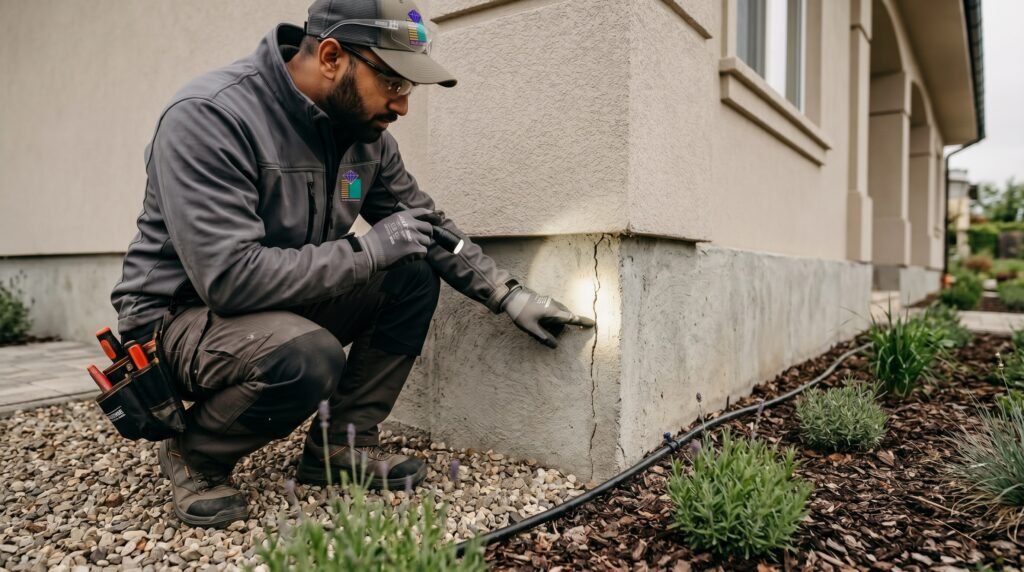
Table of Contents
Ant Control UAE: How to Stop Ant Infestations at Home & Work
A trail of ants across a kitchen counter looks minor — until it isn’t. Unlike most household pests, ants operate as coordinated colonies with a single objective: locate a food or water source and recruit the entire colony to exploit it. In the UAE’s warm climate, that recruitment happens fast, and what starts as three ants near the sugar bowl can become a sustained trail of hundreds within days.
This guide covers effective ant control UAE strategies for both homes and workplaces — the species you’re most likely dealing with, why UAE properties are particularly prone to infestation, what actually works, and when DIY effort stops being enough.
Why Ants Are Such a Persistent Problem in the UAE
Several factors specific to the region make ant control UAE-wide a recurring rather than one-off task:
Year-round warmth: Unlike temperate climates where cold winters suppress ant activity, the UAE’s consistent warmth keeps colonies active and foraging throughout the year, with only modest seasonal fluctuation.
Irrigation and landscaping: Villa communities, parks and commercial landscaping rely on constant irrigation, creating reliable moisture sources that many ant species depend on, particularly during the hottest months when outdoor moisture is otherwise scarce.
Dense urban construction: High-rise towers and villa compounds provide extensive wall cavities, expansion joints and utility conduits that create uninterrupted colony highways between units — an ant colony nesting in one apartment’s wall void can forage across several neighbouring units.
Food service density: Restaurant clusters, food courts, and office pantries provide abundant food sources, and even small amounts of spilled sugar, grease or crumbs are enough to sustain and attract foraging trails.
Multiple invasive species: The UAE hosts several particularly resilient ant species — including pharaoh ants and ghost ants — known for being especially difficult to eliminate with DIY methods because they respond to surface spraying by splitting into multiple satellite colonies rather than dying off.
Common Ant Species You'll Encounter in the UAE
Correct identification matters because treatment strategy differs meaningfully between species.
Pharaoh ants: Tiny, pale yellow-to-light-brown ants, among the most difficult UAE infestations to resolve. They nest in wall voids, behind baseboards and in electrical outlets, and are notorious for “budding” — splitting into new colonies when disturbed by surface sprays, which often makes an infestation worse rather than better.
Ghost ants: Small, pale-legged with a darker head and thorax, commonly found indoors near moisture sources — bathrooms, kitchens, potted plants. Like pharaoh ants, they respond poorly to spray-and-hope treatment.
Carpenter ants: Larger, dark-coloured ants that excavate (rather than eat) wood to build nests, potentially causing structural damage over time in properties with timber elements. Sawdust-like frass near skirting or door frames is a telltale sign.
Odorous house ants: Emit a distinct rotten-coconut smell when crushed, commonly found trailing along kitchen counters and bathroom fixtures, attracted strongly to sweet food sources.
Fire ants: Found in outdoor and garden settings, capable of a painful sting; more a landscaping and outdoor-area concern than an indoor infestation issue, but relevant for villa gardens and commercial landscaped grounds.
Signs You Have an Ant Infestation
- Visible foraging trails: a consistent line of ants moving to and from a food or water source, often along a wall edge or countertop seam
- Small entry points: ants exploiting tiny gaps around window frames, utility penetrations, or expansion joints
- Nesting debris: for carpenter ants, small piles of wood shavings; for other species, small soil mounds near foundations or cracks in paving
- Activity concentrated near moisture: bathrooms, kitchen sinks, potted plants and AC condensation drain lines
- Recurring “here today, gone tomorrow” trails: a sign the colony is foraging opportunistically and will return once a new food source appears
Why DIY Ant Control Often Fails
Most DIY attempts — surface sprays, crushing visible ants, store-bought aerosols — treat the symptom rather than the colony, and for several UAE-common species this actively backfires:
Spraying visible ants doesn’t reach the colony: The ants you see foraging are a small fraction of the total colony, which can number in the thousands and is usually hidden in wall voids or underground.
Repellent sprays can trigger budding: For pharaoh ants and several other species, disturbing a colony with repellent spray causes it to split into multiple smaller colonies that relocate and re-establish elsewhere — turning one infestation into several.
Surface cleaning alone doesn’t eliminate the pheromone trail: Ants leave chemical trails other workers follow; wiping visible trails removes the immediate scent but rarely disrupts the colony’s broader foraging pattern for long.
DIY baits are often the wrong formulation for the species present: Different ant species prefer different bait types (sugar-based vs. protein-based vs. grease-based), and using the wrong bait means the colony simply ignores it.
Effective Ant Control Methods
1. Correct Species Identification
Professional ant control UAE programs start here, because treatment strategy diverges significantly between, say, pharaoh ants and carpenter ants. A technician identifies the species and locates — or reasonably estimates — the colony location before choosing a treatment approach.
2. Targeted Gel and Bait Stations
Rather than spraying visible trails, professional treatment uses species-appropriate bait formulations that worker ants carry back to the colony, where it’s shared with the queen and larvae — eliminating the colony at its source rather than just the visible foragers.
3. Exclusion and Sealing
Sealing entry points — gaps around windows, utility penetrations, expansion joints and door thresholds — reduces new foraging access and helps prevent re-infestation once the existing colony is addressed.
4. Moisture Management
Fixing leaking pipes, correcting AC condensation drainage, and reducing standing water removes the moisture sources many UAE ant species depend on, making the property less attractive to new colonies long-term.
5. Targeted Residual Treatment (Where Appropriate)
For certain species and locations, a licensed technician may apply a residual, low-toxicity treatment to specific harbourage points — distinct from broad surface spraying, and applied in a way that doesn’t trigger colony budding.
6. Follow-Up Monitoring
Because bait treatments work over days to weeks (the colony needs time to distribute the bait internally), professional programs include a follow-up visit to confirm the colony has been eliminated rather than assuming success after a single treatment.
Ant Control for Homes vs. Workplaces
| Factor | Residential | Commercial / Workplace |
|---|---|---|
| Primary concern | Kitchen, bathroom trails, comfort | Food safety compliance, client-facing image, audit records |
| Treatment discretion | Less critical | Often essential — treatment during closed hours |
| Documentation need | Minimal | Required for food-service audits |
| Common trigger points | Kitchen counters, pet food bowls, potted plants | Pantries, break rooms, loading docks, landscaped entrances |
| Recommended approach | Targeted baiting, DIY sealing of obvious gaps | Scheduled IPM program with documented visits |
For offices, restaurants and any commercial premises, a documented, scheduled ant control UAE program carries the added benefit of audit-ready pest management records — increasingly expected during food safety and facilities inspections.
Prevention: Keeping Ants From Coming Back
- Store food (including pet food) in sealed containers, not open packaging
- Wipe up spills and crumbs promptly, particularly sugary or greasy residue
- Fix leaking taps and check AC condensation drainage regularly
- Seal visible gaps around windows, utility penetrations and expansion joints
- Trim vegetation and remove standing water near building foundations
- Avoid over-watering potted plants, a common indoor ant attractant
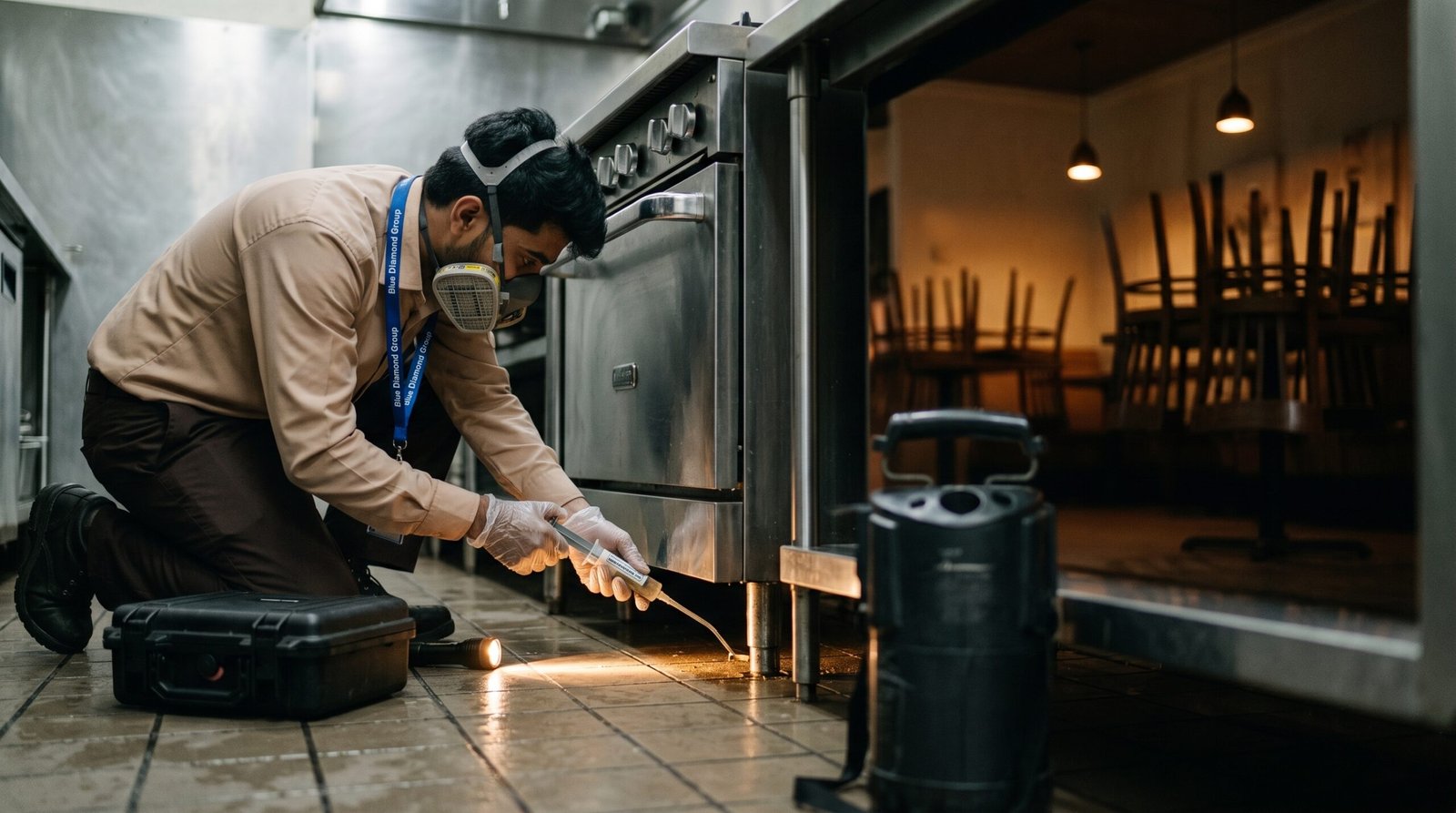
- Schedule periodic professional inspection for commercial kitchens and food-handling areas, where recurring risk is highest
Get Ahead of Your Ant Problem
Whether you’re dealing with a persistent trail across a home kitchen counter or need a documented, audit-ready program for a commercial kitchen or office, effective ant control UAE-wide comes down to correctly identifying the species and targeting the colony — not just the ants you can see.
Book a free inspection. Blue Diamond licensed technicians will identify the species involved, locate the colony’s likely harborage, and set up a treatment plan suited to your home or business — anywhere across the UAE.
Contact our team to book your Ant control UAE appointment
📞 Call us now | 📩 Request a free inspection | 📍 Serving all of Dubai & the UAE
Need a professional touch?
Don’t wait until pests take over—stay one step ahead with Blue Diamond’s pest control.
 contact@bluediamondfm.com
 +971 56 705 4223
 https://pestcontrolservicesuae.com/
Why do ants keep coming back even after I clean thoroughly?
Cleaning removes the visible trail and pheromone scent but doesn’t eliminate the colony itself, which is usually hidden in a wall void, underground, or another inaccessible location. Until the colony is treated at its source, foraging ants will simply find a new route to the same or a different food source.
Are pharaoh ants really harder to get rid of than other species?
Yes. Pharaoh ants respond to disturbance — including many DIY sprays — by splitting into multiple satellite colonies, which can turn a single infestation into several spread throughout a property. Professional bait-based treatment is generally required for reliable results.
Is ant control safe to do around children and pets?
Professional treatments use targeted, low-toxicity bait formulations placed in discreet locations specifically to minimise exposure risk, and technicians can advise on pet- and child-safe placement. Avoid broad-spectrum aerosol sprays in areas accessible to children or pets.
How long does it take for professional ant treatment to work?
Bait-based treatments typically take several days to a few weeks to fully eliminate a colony, since worker ants need time to carry bait back and distribute it internally. A visible reduction in activity is often noticeable within the first week, with full resolution following.
Do commercial kitchens need documented ant control for food safety audits?
Yes, in most cases. Food safety audits generally expect evidence of an active, scheduled pest management programme covering all common pests, including ants, with dated service records available on request.
Frequently Asked Questions (FAQs)
Share this
Book Your
Service In
30 Seconds
- 31 years of experinece
- Served 40,000+ clients across UAE
- Dubai Municipality Approved
- Eco - friendly products safe for All
- Cost Effective
- 24/7 Customer support
Check out our Recent Blogs
Best Pest Control Solutions for Restaurants in the UAE
Table of Contents Best Pest Control Solutions for Restaurants and Food Establishments in the UAE A single cockroach on a...
Blue Diamond: Leading Pest Control Provider in UAE
Table of Contents Why Blue Diamond Is the Leading Pest Control Provider in UAE Ask ten facilities managers what they...