
Pest Control for Labour Camps & Staff Housing in the UAE
- Pest_Control

Table of Contents
Pest Control for Labour Camps & Staff Accommodation in the UAE
A single labour camp can house hundreds or thousands of people in shared rooms, with communal kitchens, dining halls, bathrooms, laundries and waste areas serving them all. That density is exactly what pests look for. Left unmanaged, bed bugs, cockroaches, rodents, flies and mosquitoes spread quickly, harm residents’ health and sleep, damage food stores and put the employer’s compliance standing at risk.
Effective pest control for labour camps isn’t a monthly spray. It’s a documented, inspection-led program designed around how the accommodation is actually used. This guide explains what the UAE’s accommodation rules expect, which pests cause the most trouble, how to design a program zone by zone, how to manage bed bugs in shared rooms with dignity, what to put in the contract and how to choose a provider who can deliver at scale.
Why Labour Camps and Staff Accommodation Are High-Risk
High density: Shared rooms and bunk beds put many people in a small space, so pests that reach one bed or room can spread quickly.
Shared kitchens and dining halls: Large-scale cooking, bulk food storage and heavy dishwashing create steady food, grease and moisture, which sustains cockroaches, rodents and flies.
Shared bathrooms, laundries and drains: Constant moisture and warmth suit cockroaches, drain flies and mosquitoes.
Waste volumes: Bins, skips and compactors serving large numbers of residents are a major attractant if collection or cleaning slips.
High turnover: New arrivals, transfers and visitors bring luggage and belongings that can carry bed bugs into the camp.
Heat and humidity: Year-round warmth keeps breeding cycles running, and air-conditioned rooms attract insects seeking cool shelter.
Older and temporary buildings: Gaps, damaged seals, old drainage and temporary structures give pests easy entry and harborage.
What the UAE’s Accommodation Rules Expect
Pest control is built into the UAE’s labour accommodation requirements. Government guidance on accommodation standards states that effective procedures must be taken to prevent pests, insects and rodents from existing and reproducing, and that a specialised pest control company must be appointed to carry out pest control in the housing unit according to approved schemes, and that kitchens must be equipped with pest control tools and kept clean.
Published summaries of the updated standards add that accommodation must be cleaned daily, have proper waste disposal systems and be supported by pest control measures.
The framework continues to evolve. The Ministry of Human Resources and Emiratization has issued Ministerial Resolution No. 122 of 2026 on updated labour accommodation requirements, and where the ministry finds incorrect information or a breach of the applicable standards, it may suspend the accommodation file in its systems and notify the relevant authorities. Responsibilities are shared across bodies. The ministry oversees labour compliance at federal level, while in Dubai the municipality and civil defence authorities handle building use, health and fire safety. Other emirates have their own supervisory authorities and codes. For example, a Sharjah occupational safety and health code for worker accommodation includes a dedicated pest control section and covers labour camps, villas, compounds and apartments used as staff housing.
rules apply to you depends on your workforce size, wage levels, emirate and who owns the accommodation, so confirm the current requirements for your sites with the relevant authorities. What doesn’t change is the practical expectation: a planned, documented program run by a qualified provider.
Common Pests and the Risks They Bring
| Pest | Where It Shows Up | Main Risks |
|---|---|---|
| Bed bugs | Bunk beds, mattresses, bed frames, wall voids, luggage | Disturbed sleep, skin irritation, rapid spread between rooms, resident distress and complaints |
| Cockroaches | Kitchens, dining halls, bathrooms, drains, behind appliances | Food contamination, allergies, hygiene failures and audit findings |
| Rodents (rats and mice) | Stores, kitchens, waste areas, ceiling voids, perimeters | Food contamination, gnawed cables and fire risk, property damage |
| Flies and drain flies | Bins, kitchens, drains, dining areas | Contamination of food and surfaces, nuisance |
| Mosquitoes | Standing water, drains, roofs, landscaping | Bites and disturbed sleep, wider public health concern |
| Ants | Kitchens, stores, sweet and food residues | Contamination, nuisance and persistent infestations |
| Stored-product insects | Dry food stores, rice, flour, pulses | Spoiled stock and complaints about food quality |
| Birds | Roofs, canteen areas, water tanks | Droppings, hygiene and noise problems |
Designing a Program: Start With a Survey
An effective program starts with a site survey and risk assessment, not a standard visit schedule. A good provider will:
- Map the whole site: blocks, rooms, kitchens, dining halls, stores, bathrooms, laundries, waste areas, drains, roofs and the perimeter
- Identify risks and harbourage: gaps, damaged seals, drainage issues, waste handling, moisture, clutter and structural problems
- Set zone-by-zone priorities: based on use and risk
- Number and map monitoring points: so activity can be tracked over time
- Agree a schedule and response plan: including how residents will be informed and how emergencies will be handled
Zone-by-Zone Treatment and Frequency
| Zone | Main Pests | Typical Approach | Typical Frequency |
|---|---|---|---|
| Kitchens and food preparation | Cockroaches, rodents, flies, ants | Gel baiting, drain treatment, proofing, monitoring | Frequent, often weekly or fortnightly |
| Dining halls | Cockroaches, flies, ants | Targeted treatment, light traps, waste management | Weekly to fortnightly |
| Food stores | Rodents, stored-product insects | Stations, proofing, stock inspection, monitoring | Fortnightly to monthly |
| Sleeping rooms | Bed bugs, cockroaches, ants | Scheduled inspection, targeted treatment, room-by-room follow-up | Monthly inspection, with fast response to reports |
| Bathrooms and laundries | Cockroaches, drain flies, mosquitoes | Drain treatment, moisture control, targeted treatment | Fortnightly to monthly |
| Waste areas and skips | Flies, rodents, cockroaches | Cleaning, lid and containment checks, targeted treatment | Weekly |
| Perimeter and grounds | Rodents, mosquitoes, ants | Stations, drainage checks, vegetation and standing-water control | Monthly, with extra checks after rain |
| Roofs, tanks and voids | Birds, rodents, mosquitoes | Inspection, proofing, bird control, tank covers | Quarterly or as needed |
These are starting points. Your provider should adjust frequency using monitoring data and the camp’s actual conditions.
Managing Bed Bugs in Shared Rooms
Bed bugs are the single hardest pest in shared accommodation, and the one most likely to cause distress. A sensible approach:
- Inspect on a schedule: not only after complaints, because bed bugs are easy to miss early
- Make reporting simple and safe: Residents should be able to report signs without embarrassment or penalty, in their own languages
- Treat room by room: including bed frames, mattresses, wall voids, furniture and nearby rooms
- Coordinate with residents: Arrange treatment when rooms are empty where possible, explain what to expect and give clear instructions for bagging and washing belongings
- Use proven methods: such as targeted treatment or heat, and follow up with repeat inspections, since a single visit rarely clears an infestation
- Protect against reinfestation: check new arrivals’ belongings where appropriate, use mattress protection and inspect transferred beds and furniture
- Replace badly damaged beds and mattresses: rather than treating beyond repair
- Track every case: by room and date, so patterns can be seen early
Our seasonal pest control tips and re-entry safety guides cover the basics of preparing homes for treatment, which apply to accommodation too.
Kitchens and Dining Halls
Large catering kitchens are the heart of the camp’s pest risk and its compliance exposure.
- Keep food in sealed containers: off the floor, with stock rotation
- Fix drainage and grease problems: A well-maintained grease trap and clear drains reduce cockroaches and drain flies- see our guides to grease trap maintenance for staff canteens and to restaurant drain blockages.
- Clean thoroughly each day: including behind and under equipment
- Control waste: lidded bins, frequent removal and clean waste areas
- Apply the same documentation standards as a food business: see our UAE restaurant compliance checklist and our guide to pest control solutions for food establishments.
Accommodation rules also restrict cooking in sleeping rooms, which prevents a major source of food residue and pests.
Waste, Sanitation and Drainage
Pest prevention depends on sanitation as much as treatment:
- Daily cleaning: of rooms and common areas
- Reliable waste collection: and clean, sealed storage
- Drainage checks: with clear gullies and no standing water
- Prompt repair of leaks: and damp areas
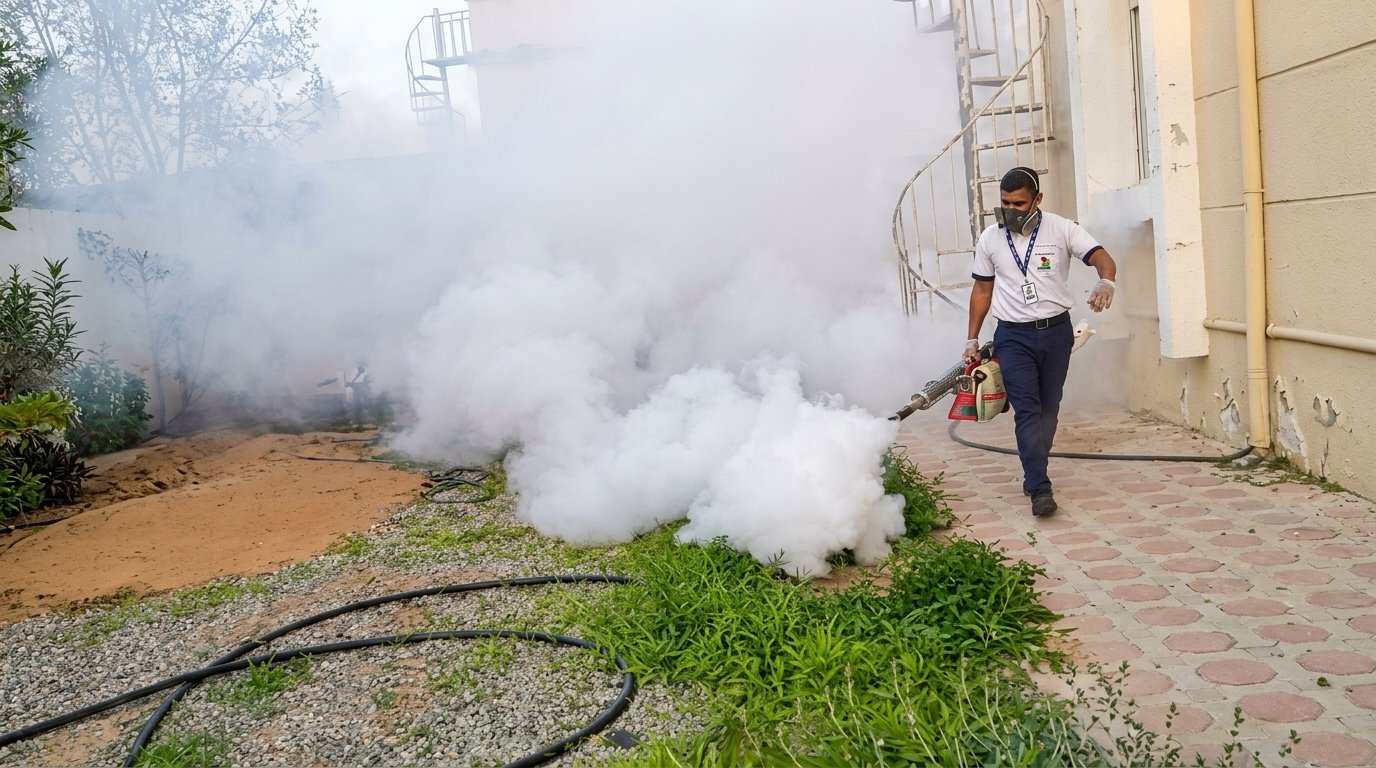
- Mosquito control: around drains, roofs and landscaping, especially after rain- see our guide to mosquito control in the UAE after rain.
Involving Residents: Communication That Works
Residents are the first line of detection, and respectful, clear communication improves results.
- Use simple signs and posters in the languages residents speak: with pictures as well as words
- Explain what to do and why: keep food sealed, report problems early, don’t store food in rooms and keep spaces tidy
- Make reporting easy and free of blame: through a supervisor, a hotline or a simple form
- Give notice before treatment: with clear instructions and timing
- Respond visibly: When residents see reports acted on quickly, they report earlier next time
Planning Treatments Around the Workforce
Treatment must fit shift patterns and protect residents:
- Schedule around shifts: so people who work nights can sleep and those on day shifts aren’t disrupted
- Treat in sections: so beds and rooms remain available
- Protect food, medicines and personal belongings: as advised
- Allow proper drying and ventilation: before re-entry- see our guide to how long after pest control you can return home.
- Keep children and pets away: where families or animals are present in staff housing
- Record what was done: in each room
Reporting, Records and Audits
Documentation is evidence of compliance and a management tool. A strong program provides:
- A site plan: with numbered monitoring points
- Dated service reports: after every visit, listing findings and actions
- Product details and safety data sheets
- Trend analysis: showing activity over time, by zone and room
- Corrective-action lists: for structural, sanitation and housekeeping issues outside the pest control scope
- Records of bed bug cases: and follow-up
- Evidence for audits: by authorities, clients, main contractors and accreditation bodies
Keep these records together and accessible for each site.
Contract Essentials and KPIs
If you’re procuring pest control for labour camps, specify:
- The scope: all zones, all pests and all visits
- Schedule and response times: including emergency and same-day response for critical issues
- Reporting requirements: and format
- Staffing: trained, identifiable technicians, with a named supervisor
- Communication duties: notices and multilingual materials
- KPIs: such as monitoring-point activity, bed bug case numbers and resolution time, and complaint closure time
- Consequences: for missed visits or unresolved issues
- Review meetings: monthly or quarterly
- Multi-site arrangements: with consistent standards across camps
Our annual grease trap maintenance plans guide shows how a scheduled contract with KPIs can be structured, and the same principles apply here.
Who Is Responsible? Employer, Operator or Landlord
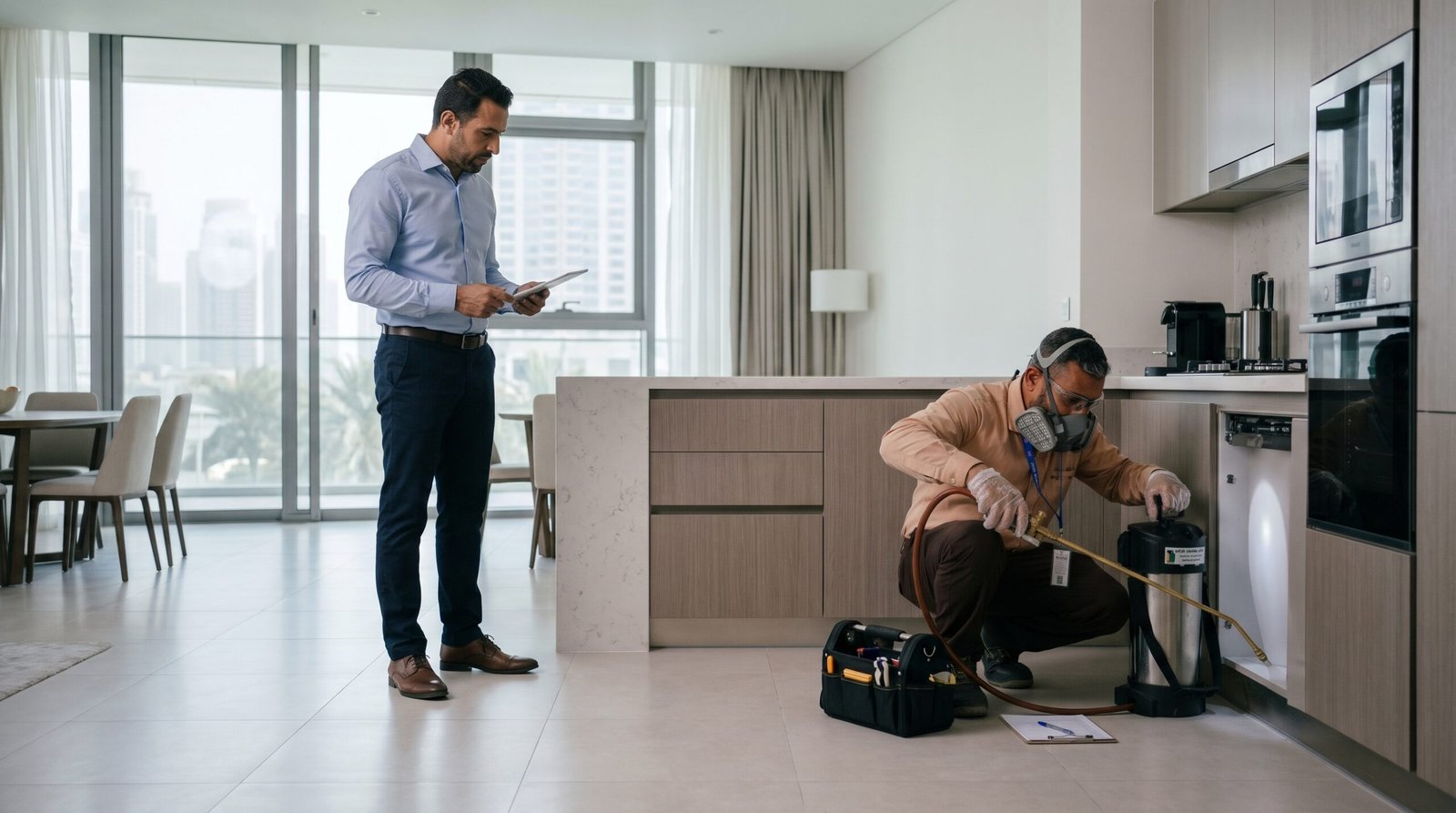
Accommodation is often owned by one party, operated by another and used by a third. Confirm in writing who is responsible for:
- Commissioning and paying for pest control
- Structural repairs and proofing
- Waste and drainage
- Records and compliance reporting
- Resident communication
Where an employer houses workers in third-party accommodation, the employer should check that the accommodation provider’s arrangements meet the applicable standards.
Choosing a Pest Control Contractor for Labour Camps
Look for a provider who can show:
- A valid trade license: and products registered for use in the UAE with safety data sheets
- Experience with large accommodation sites: with references
- Trained crews: able to cover many rooms efficiently without cutting corners
- A documented IPM method: and site survey, not a spray-only service
- A bed bug protocol: with scheduled inspection and follow-up
- Shift-friendly scheduling: and clear resident communication
- Audit-ready reporting: with site plans, trends and corrective actions
- Defined response times: for emergencies
- Public liability insurance
- Capacity to cover multiple sites: with consistent standards
What Affects the Cost?
Pricing is set after a survey and typically depends on:
- Number of residents, rooms and buildings
- Kitchen and dining facilities
- Visit frequency and response commitments
- Pests covered: and whether bed bug management is included
- Reporting and audit requirements
- Site condition and structural issues
- Contract length and number of sites
A low price that leaves out bed bug follow-up, monitoring or reporting usually costs more in the end.
Healthier Housing, Easier Audits
Good pest control for labour camps protects residents’ health and sleep, safeguards food and property, and gives employers and operators the documented proof that inspectors and clients expect. It works best as a planned programme: a survey, a zone-by-zone schedule, respectful communication with residents, clear records and a contractor with the capacity to deliver.
Book a free site survey today. Blue Diamond licensed technicians will assess your accommodation, map the risks by zone and give you a clear written program with schedules, reporting and response times, for labour camps and staff housing anywhere in the UAE.
Contact our team to book your pest control Service in UAE appointment
📞 Call us now | 📩 Request a free inspection | 📍 Serving all of Dubai & the UAE
Need a professional touch?
Don’t wait until pests take over—stay one step ahead with Blue Diamond’s pest control.
 contact@bluediamondfm.com
 +971 56 705 4223
 https://pestcontrolservicesuae.com/
Is pest control mandatory in labour accommodation in the UAE?
Government guidance on labour accommodation standards expects effective pest prevention and the appointment of a specialised pest control company under approved schemes. Requirements depend on your workforce, emirate and accommodation type, so confirm what applies to your sites.
How often should a labour camp have pest control?
It depends on the site’s size and risk. Kitchens, dining halls and waste areas usually need weekly or fortnightly attention, while sleeping rooms and other zones are often monthly with fast response to reports. A survey and monitoring data should set the schedule.
How do you control bed bugs in a labour camp?
Use scheduled inspections, easy and blame-free reporting, room-by-room treatment with follow-up visits, protective measures for new arrivals and beds, and record every case by room and date. A single treatment rarely clears an infestation.
Who is responsible for pest control in rented staff accommodation?
It depends on the contract and the arrangement between employer, operator and landlord. Agree in writing who commissions, pays for and documents pest control, and check that the accommodation meets the applicable standards. Our guide to who pays for pest control in the UAE explains how responsibility is usually divided.
What records do inspectors or clients ask for?
Typically the pest control contract, the contractor’s license, service reports, a site plan with monitoring points, product details and trend data. Keep them together for each site.
Frequently Asked Questions (FAQs)
Share this
Book Your
Service In
30 Seconds
- 31 years of experinece
- Served 40,000+ clients across UAE
- Dubai Municipality Approved
- Eco - friendly products safe for All
- Cost Effective
- 24/7 Customer support
Check out our Recent Blogs
Pest Control in the UAE: Tenant vs Landlord Responsibility
Table of Contents Who Pays for Pest Control in the UAE, Tenant or Landlord? You move into a rental apartment,...
Mosquito Control in the UAE After Rain | Stop Breeding
Table of Contents Mosquito Control in the UAE After Rain: Stop Breeding in Pools, Planters & Drains Rain is rare...