
What Pest Control Technicians Look for During an Inspection
- Pest_Control
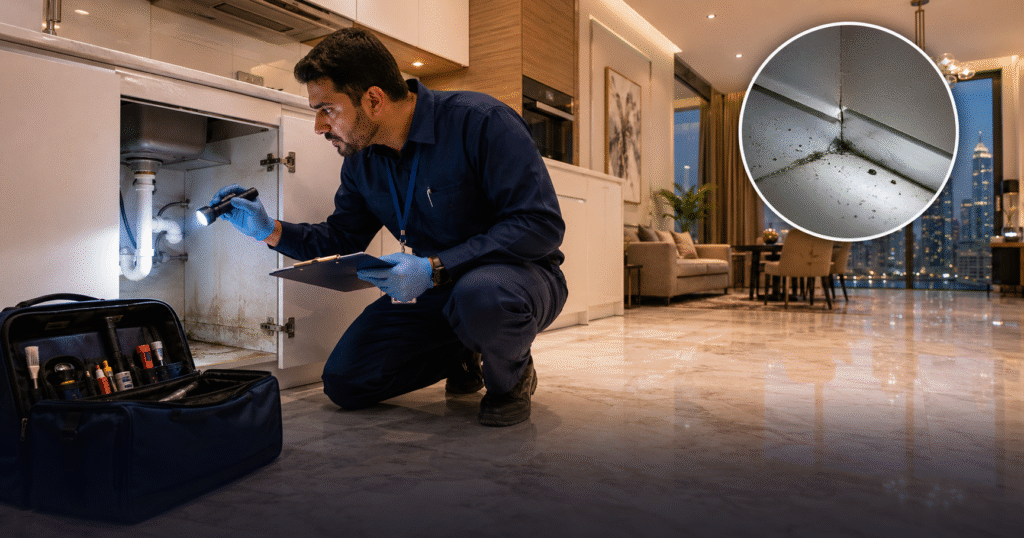
Table of Contents
Introduction
Why a Professional Assessment Is Different
Many homeowners assume a professional assessment simply involves checking for visible insects or droppings. In reality, a thorough professional evaluation is a comprehensive structural and environmental review.
Certified pest control professionals are trained to think like the pests they pursue — understanding how different species enter a property, where they prefer to nest, what conditions they need to thrive, and what the earliest signs of their presence look like before a problem becomes visible. A skilled assessment identifies not just active activity but the conditions that make future activity likely — giving homeowners the opportunity to act before a minor issue becomes a serious one.
1. Entry Points and Structural Vulnerabilities
The first thing our specialists examine is how pests are — or could be — gaining access to the property. This is far more detailed than checking whether a window is open.
A professional evaluation covers:
- Gaps around pipes, conduits, and utility penetrations — even a gap of a few millimetres is sufficient for cockroaches, ants, and mice to enter.
- Door and window seal integrity — worn or missing seals create easy access for a wide range of species throughout the year.
- Cracks in external render, brickwork, or concrete — particularly relevant in older UAE properties where thermal movement has caused structural micro-cracking over time.
- Roof junctions and eave gaps — common entry routes for rodents and birds seeking nesting sites.
- Drainage connections and waste pipe access — one of the most frequent entry points for cockroaches in Dubai apartment buildings.
Identifying and sealing these vulnerabilities is often as important as any chemical treatment applied.
2. Signs of Active Pest Activity
Once entry points are assessed, technicians move through the property systematically, looking for evidence of current pest presence:
- Droppings and smear marks — different species leave distinctly different traces, and trained specialists identify the likely culprit from the appearance, size, and location of what they find.
- Gnaw marks on wiring, woodwork, or packaging — a strong indicator of rodent activity, often found in kitchen cabinets, utility rooms, and ceiling voids.
- Shed skins and egg casings — cockroach oothecae are frequently found behind appliances, inside cabinet hinges, and along pipe runs.
- Tunnelling or hollow-sounding timber — a key sign when assessing wooden structural elements or furniture for termite activity.
- Wing deposits near light sources — discarded insect wings near windows and light fixtures indicate a swarming event, often linked to termites or flying ants.
Live or dead insects — location, time of day, and species all provide important information about the extent and nature of activity present.
3. Environmental and Moisture Conditions
Dubai’s climate makes moisture management one of the most critical factors in any property evaluation. Many of the most common species — cockroaches, silverfish, mosquitoes, and certain ant species — are attracted primarily by moisture rather than food.
During an assessment, our certified team looks for:
- Leaking or sweating pipes — even minor condensation creates moisture conditions that attract pests consistently over time.
- Poor drainage and standing water — both inside the property and in outdoor areas including balconies, planters, and AC drainage points.
- Damp or waterlogged building materials — wet insulation, damp plaster, or saturated floor screeds create ideal nesting conditions for moisture-loving species.
- Ventilation adequacy — poorly ventilated spaces such as under-sink cabinets, utility rooms, and roof voids are among the most common harborage sites our team identifies.
Addressing moisture issues is frequently the single most effective long-term prevention measure a homeowner can implement.
4. Food Sources and Harborage Conditions
Beyond moisture, food availability is the other primary driver of pest attraction. Our certified professionals are trained to identify conditions that give pest species reliable food access:
- Improperly stored food — open packaging, uncovered fruit bowls, and accessible pet food are all significant attractants that our team flags consistently.
- Grease and organic residue — particularly behind and beneath kitchen appliances where routine cleaning rarely reaches.
- Waste management conditions — bin storage areas, compost points, and waste chutes in apartment buildings are consistently identified as high-risk zones.
- Clutter and stored materials — cardboard boxes, stacked newspapers, and infrequently moved items provide ideal nesting material for cockroaches and rodents.
5. Previous Treatment History
An important but often overlooked element of a thorough property review is the history of any previous pest management activity. Our team asks about and looks for evidence of prior treatments — assessing whether they were effective, what species were targeted, and whether conditions have been adequately addressed.
This history directly informs the most appropriate current approach and identifies whether any resistance patterns or recurring activity cycles need to be specifically addressed in the new programme.
6. Risk Rating and Recommendations
At the conclusion of every Blue Diamond visit, our pest control specialists compile findings into a clear risk assessment covering:
- Active issues requiring immediate targeted treatment.
- High-risk conditions needing remediation to prevent future activity.
- Low-risk observations to monitor on an ongoing basis.
- Recommended treatment programme — including product selection, application method, and follow-up schedule.
Every recommendation is explained in full, giving homeowners complete understanding of what has been found, what it means, and what the most effective response looks like.
Conclusion
A professional property assessment is far more than a quick walk-through. It is a skilled, systematic evaluation of your entire home — identifying active threats, hidden vulnerabilities, and environmental conditions that place your property at risk. Blue Diamond’s certified pest control technicians bring the knowledge, experience, and eye for detail to deliver assessments that genuinely protect Dubai homes — not just today but for the long term ahead.
Contact Blue Diamond today to book your complimentary property evaluation and take the first step toward a fully protected, pest-free home.
Need a professional touch?
Don’t wait until pests take over—stay one step ahead with Blue Diamond’s pest control.
 contact@bluediamondfm.com
 +971 56 705 4223
 https://pestcontrolservicesuae.com/
How long does a professional pest inspection take in Dubai?
For a standard Dubai apartment or villa, a thorough property assessment by Blue Diamond’s certified specialists typically takes between 30 and 60 minutes, depending on the size and complexity of the property. Larger homes, commercial premises, or properties with suspected structural issues such as termites may require a more extended evaluation.
Do I need to prepare my home before a professional assessment?
No major preparation is required. However, providing access to all areas — including kitchen cabinets, utility rooms, roof spaces where accessible, and outdoor areas — allows our certified team to conduct the most comprehensive evaluation possible. Clearing clutter from under sinks and behind appliances also helps the process significantly.
What happens if active pests are found during the assessment?
If our evaluation identifies active pest activity, our certified specialist will explain the findings clearly and recommend an appropriate treatment programme on the spot. In many cases, treatment can begin on the same visit, minimising the time between identification and resolution.
Is a professional pest control assessment only necessary when there is already a visible problem?
Not at all. A proactive evaluation is one of the most valuable services Blue Diamond offers — identifying vulnerabilities and early-stage activity before a visible problem develops. Many homeowners schedule annual evaluations as part of routine property maintenance, particularly before summer when pest activity in Dubai intensifies significantly.
Can your team detect termites if there are no visible signs yet?
Yes. Blue Diamond’s certified specialists are equipped to detect termite activity well before it becomes visible — assessing timber soundness, identifying characteristic mud tubes, checking moisture levels in structural elements, and recognising the environmental conditions that favour establishment. Early detection dramatically reduces the cost and complexity of treatment.
Frequently Asked Questions (FAQs)
Share this
Book Your
Service In
30 Seconds
- 31 years of experinece
- Served 40,000+ clients across UAE
- Dubai Municipality Approved
- Eco - friendly products safe for All
- Cost Effective
- 24/7 Customer support
Check out our Recent Blogs

Best Pest Control Solutions for Restaurants in the UAE
Table of Contents Best Pest Control Solutions for Restaurants and Food Establishments in the UAE A single cockroach on a...
Blue Diamond: Leading Pest Control Provider in UAE
Table of Contents Why Blue Diamond Is the Leading Pest Control Provider in UAE Ask ten facilities managers what they...