
Common Pest Risks in Vacant Properties and Construction Sites
- Pest_Control
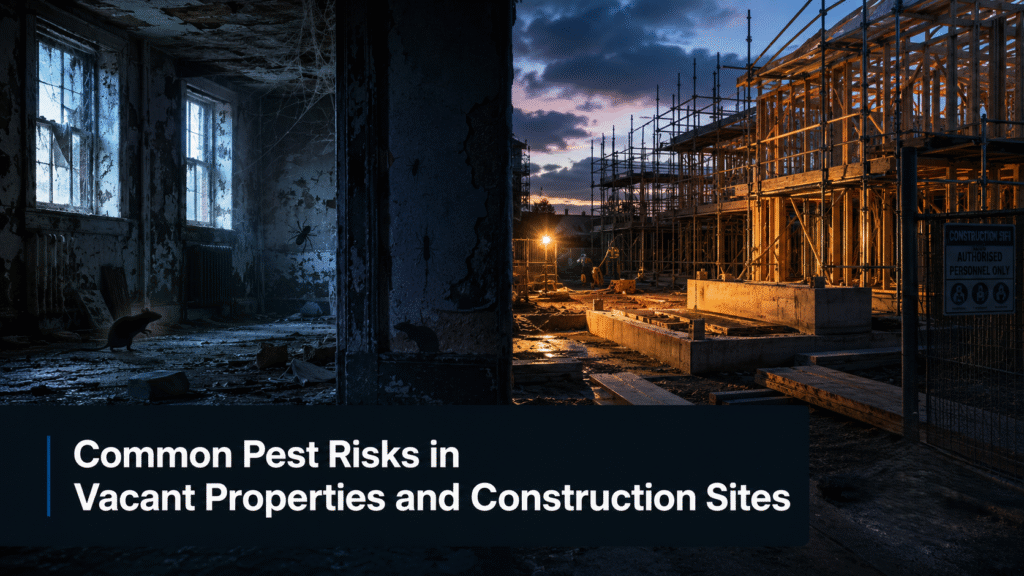
Table of Contents
Introduction
Pest risks in vacant properties and at active construction sites are among the most underestimated challenges facing property owners, developers, and site managers today. Whether you own an unoccupied building awaiting renovation or manage a bustling construction zone, the conditions in both environments create the perfect storm for pest activity — and the damage caused can be costly, dangerous, and difficult to reverse.
This guide explores the most common pests found in these settings, why they thrive there, and what proactive steps you can take to protect your assets.
Why Vacant Properties Attract Pests
Vacant properties offer pests exactly what they need: shelter, warmth, moisture, and minimal disturbance. Without regular human activity, infestations can grow unchecked for months before they are discovered. The longer a building sits empty, the higher the pest risks become.
Some of the main attractants include:
- Standing water from leaking pipes or poor drainage
- Food debris left behind by previous occupants
- Cracks, gaps, and structural deterioration that allow easy entry
- Undisturbed spaces ideal for nesting — lofts, basements, wall cavities
- Overgrown gardens or accumulated rubbish on surrounding land
Construction Sites: A Breeding Ground for Infestations
Active construction sites present a different but equally significant set of pest risks. Building work disturbs the ground and surrounding environment, displacing existing pest populations and creating new entry points and habitats as the structure takes shape.
Pest risks on construction sites are amplified by:
- Soil excavation disturbing rodent burrows and insect colonies
- Stored building materials such as timber, insulation, and cardboard attracting pests
- Food waste from workers’ canteen areas drawing in flies, rats, and birds
- Open structures and exposed framework offering easy access for nesting
Slow build timelines that allow colonies to establish before the building is sealed
The Most Common Pests Found in These Environments
Rodents
Rats and mice are the most prevalent pests in both vacant properties and construction zones. They can gnaw through wiring, pipework, and structural materials — creating serious fire hazards and causing expensive damage. Rodents breed rapidly, meaning a small problem can escalate quickly in unmonitored vacant properties.
Cockroaches
Cockroaches thrive in warm, damp conditions and are commonly found in the kitchens, bathrooms, and basements of vacant buildings. They spread bacteria and can contaminate surfaces long after a property has been left empty. In construction sites, they often establish colonies in wall cavities and service ducts before the build is complete.
Flies and Flying Insects
Construction waste and decomposing organic material attract large fly populations. Cluster flies may also use vacant properties as overwintering sites, arriving in large numbers in wall voids and loft spaces. Left untreated, these infestations can spread into adjacent occupied properties.
Wasps and Bees
Undisturbed eaves, wall cavities, and structural gaps in vacant buildings make excellent nesting sites for wasps and bees. Construction scaffolding and timber frameworks are equally attractive. Nests that go undetected can become extremely large before workers or visitors are put at risk.
Birds
Pigeons and starlings frequently roost in the open framework of construction sites and through broken windows in unoccupied buildings. Bird droppings present a health hazard, can block drainage systems, and accelerate structural deterioration through their acidic content.
Ants and Termites
Ants and, in warmer climates, termites are drawn to the timber, insulation, and moisture found in both construction sites and long-unoccupied buildings. Termites in particular pose a catastrophic structural risk if left undetected.
The Hidden Costs of Ignoring Pest Risks
Ignoring pest risks in vacant properties can have serious financial and legal consequences. Property owners may face:
- Damage to wiring, insulation, and structural timbers
- Contamination of the building requiring specialist deep-cleaning
- Delayed project timelines on construction sites due to infestations
- Health and safety violations and potential legal liability
- Reduced property value and complications during surveys or sales
How to Manage Pest Risks Effectively
The most effective approach to managing pest risks in vacant properties and on construction sites is a combination of prevention, monitoring, and professional intervention.
Key preventive measures include:
- Conducting regular inspections — even on unoccupied buildings
- Sealing entry points including gaps around pipes, vents, and windows
- Managing waste disposal rigorously on construction sites
- Eliminating standing water and improving drainage
- Installing physical proofing such as bird netting and door brush strips
For construction projects, appointing a pest control contractor before groundworks begin is strongly recommended. Early monitoring and treatment prevent pests from establishing within the developing structure, saving significant time and cost later in the project.
At Blue Diamond Pest Control, we provide tailored pest management programmes specifically designed for vacant properties and live construction environments. Our qualified technicians carry out thorough site surveys, implement proofing measures, and provide ongoing monitoring to keep your project on track and your assets protected.
Conclusion
Pest risks in vacant properties and construction sites will not manage themselves. The combination of minimal activity, structural vulnerability, and constant environmental change makes both settings a prime target for infestation — and the longer the problem goes unaddressed, the more expensive and disruptive it becomes.
Prevention is always more cost-effective than cure. Regular inspections, proper proofing, and early professional intervention are the simplest ways to protect your property and keep your project on schedule.
At Blue Diamond Pest Control, we are ready to help. From pre-construction surveys to ongoing monitoring of vacant buildings, our team provides the expert support you need to stay pest-free.
Get in touch today to book your free site survey.
Need a professional touch?
Don’t wait until pests take over—stay one step ahead with Blue Diamond’s pest control.
 contact@bluediamondfm.com
 +971 56 705 4223
 https://pestcontrolservicesuae.com/
How quickly can a pest infestation develop in a vacant property?
Very quickly. Rodents can establish a colony within a few weeks if conditions are favourable. Cockroach populations can double in size in a matter of days. The longer a property is left unmonitored, the greater the pest risks — which is why regular inspections are essential even for unoccupied buildings.
Are property owners legally responsible for pest control in vacant buildings?
Yes. Under the Prevention of Damage by Pests Act 1949 and various local authority regulations, landowners and property managers have a duty to prevent infestations from spreading to neighbouring properties. Failure to manage pest risks in vacant properties can result in notices, fines, and legal action.
What is the biggest pest risk on a construction site?
Rodents are typically the most significant threat on construction sites due to the ground disturbance caused by excavation and the availability of food waste from workers. However, flying insects, wasps, and birds all present significant pest risks depending on the site location and time of year.
Can pests that enter during construction be treated once the building is completed?
Yes, but it is far more difficult and expensive to treat an infestation in a finished building than to prevent one during construction. Once walls are sealed and insulation is in place, pests can be almost impossible to locate and treat without invasive works. Prevention is always the better strategy.
How often should a vacant property be inspected for pests?
We recommend a minimum of monthly inspections for vacant properties, with additional surveys following significant weather events, nearby construction activity, or any changes in the condition of the building. Properties in higher-risk locations — near water, dense vegetation, or food businesses — should be inspected more frequently.
Frequently Asked Questions (FAQs)
Share this
Book Your
Service In
30 Seconds
- 31 years of experinece
- Served 40,000+ clients across UAE
- Dubai Municipality Approved
- Eco - friendly products safe for All
- Cost Effective
- 24/7 Customer support
Check out our Recent Blogs
Commercial Pest Control Suppliers RAK | Guide
Table of Contents Commercial Pest Control Suppliers RAK Ras Al Khaimah is no longer the quiet northern emirate. With Saqr...
Top Pest Control Companies in Dubai (2026 Guide)
Table of Contents Top Pest Control Companies in Dubai Top Pest Control Companies in Dubai all share a handful of...